School
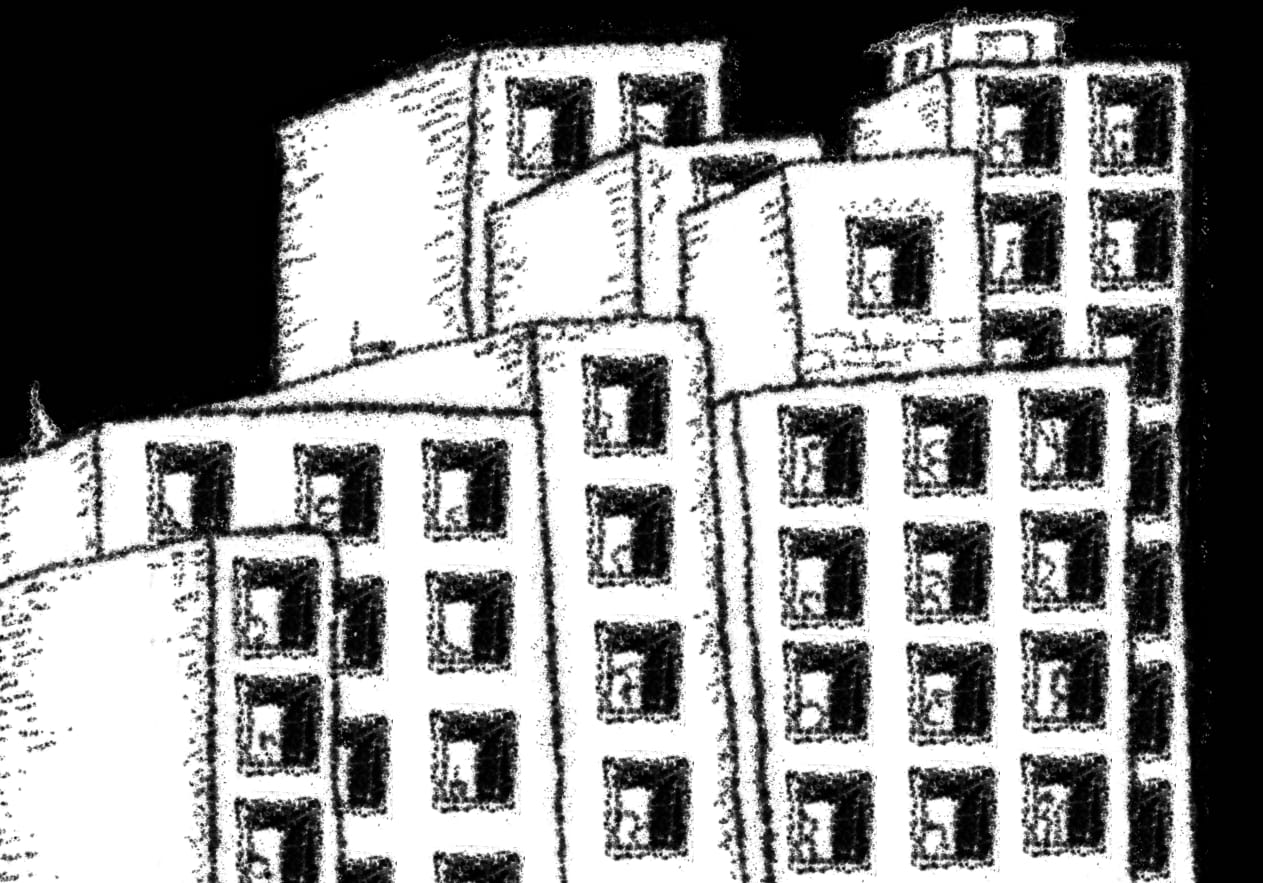
Like many, I remember school through a veil of years of indifference to childhood memories that grownups, at a certain point, must admit to, and I do unhesitatingly, but mine are a complicated palimpsest of ambition, triumph, misadventures, romance, then—shame, regrets—most now like old luggage tags, expired or useless to recount, like the memory of city Calcutta as boring brick and mortar self-similar repeating blocks, defecating ungulates on my way to school or spherical, sweaty, hirsute flabby school-females with phallic water-bottles in depressingly longish skirts. I confess, as useless as perhaps the utility for, or the importance of, the places and characters and several linked trivia that I sometimes wake up to, wade, and wallow in, now that I am fifty.
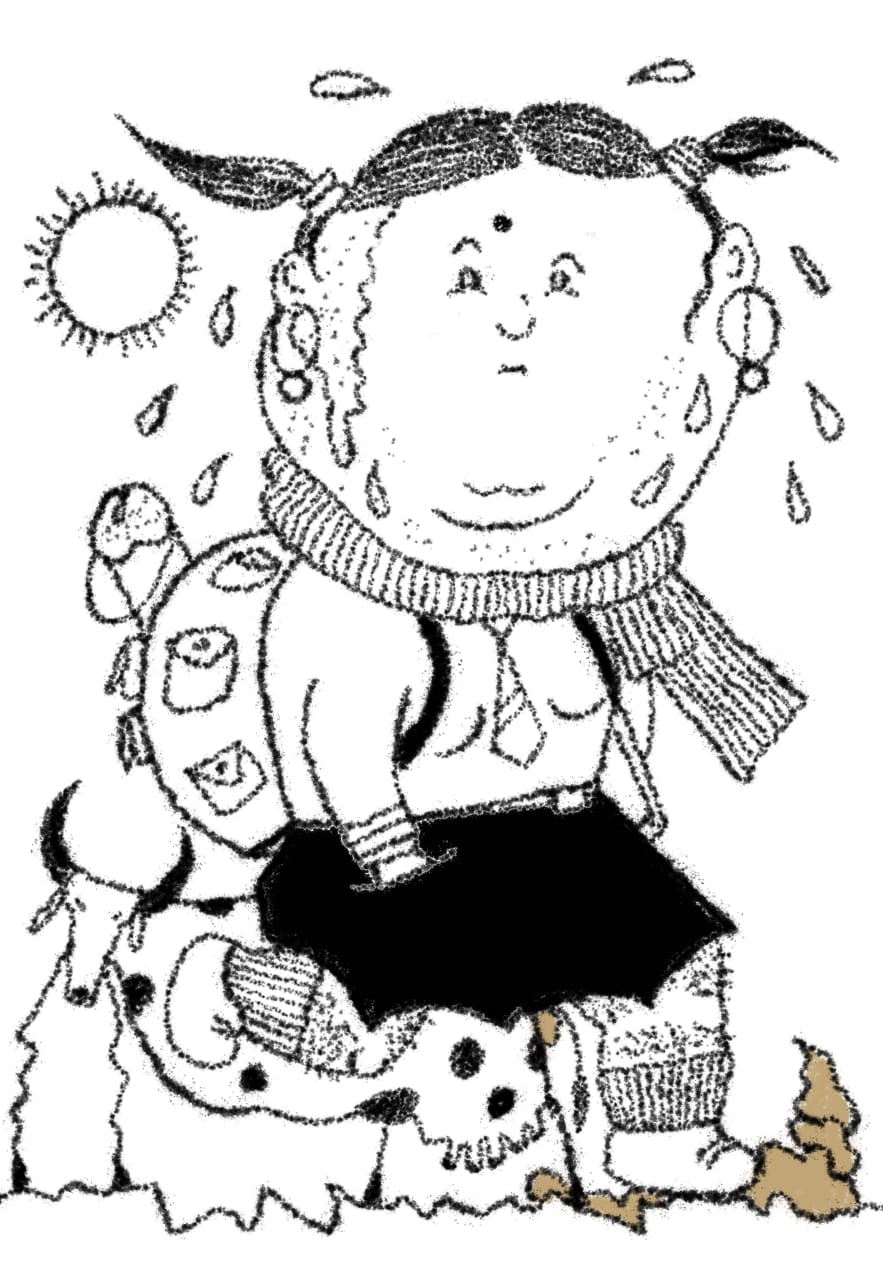
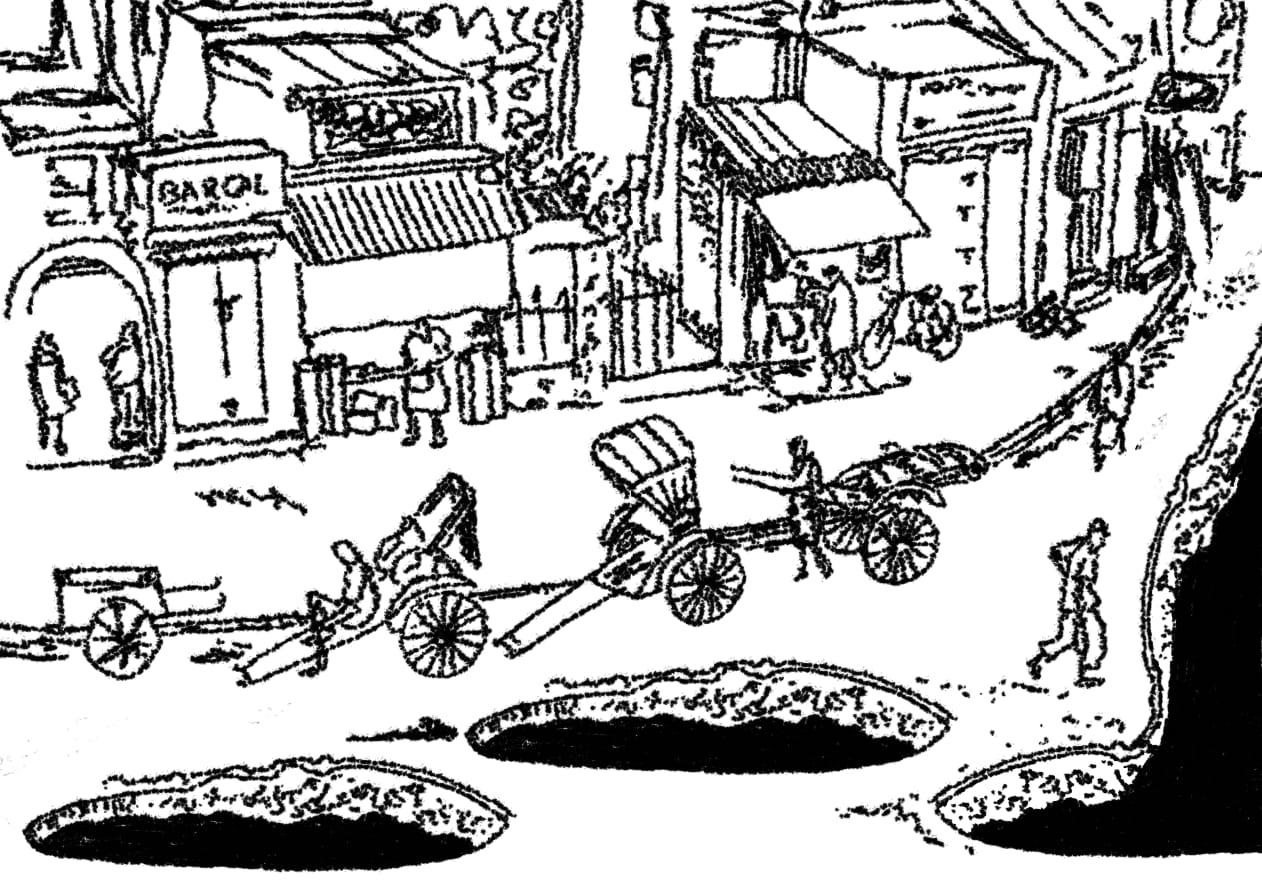
My past is ancient and present is a mystery speeding past; I live now mostly to live, really—to barely escape frequent and routine annihilation, survive to remember and recollect the person I am, I was, I once wanted to be—inadvertently became, on the way to be—a leery litany of metamorphosis of a self that mostly started and remained unchanged at the core—which was a fledgling when I became a schoolboy to begin with and started to think, first feel, of course—mainly, in my case, see through thick myopia-correcting glasses—a visual person, and in my particular case, overthink the still-uncorrected blurry—cerebrally—the world through the senses, through the then immature prefrontal and amygdalian theaters of rehearsed endorsements. It happened in a shockingly short span, then weirdly in a longish sort of lifetime after—that I’m only now able to reconstruct into the surreal solipsist absurdity I have managed to bungle myself into being. And although the seeds of this blog are repressively buried in my depressive, ruminative reading and manic book purchases at several Half-Price Books, Barnes and Noble or Borders in San Antonio and Austin where I justified my existential merit only as an obsessed bibliomanic and tsundoku, I want to start with what ordinarily is the start—my first memories of growing up in Calcutta. I have an embarrassing memory of a very early male size comparison shame, while playing with my sprinkler on the nursery kindergarten back drain wall—the competition was a boy who was quite a bit big-boned and larger than the other, several, jiggling animated adipose-puffed protuberance exhibits, the usual nursery nuisances that litter such playful pigsties. But what had caught my attention and had stayed to this day was—his sprinkler was not only endowed with bigger plumbing with ginormous dark velvety spheres, the resulting stream from the hydrology that came out unthrottled was thicker, more unbidden, forceful, and painted the wall with such yellow ferocity that the reflected spray made me notice his assets with awe. I have no way of going back and sifting through that particular memory’s soaked sodden soil, a kid’s private memory this—I didn’t share with even my mother—who at the time was my only confidante. But toilet, or rather the anathema of an always overflowing unkempt school loo, forced me to teach myself to hold my bowels. On two occasions I couldn’t, and I defecated in my school half-pants, unable to hold it, as far as I can recollect, trying to keep composure on a waddling dilapidated hand-pulled rickshaw over a city full of potholes each the size of a mini Grand Canyon—these my mother can submit affidavits if required. Poor woman, this is back in the day when the washing machine wasn’t even in the impoverished imagination of the North Calcutta middle class, and we weren’t that affluent to have maids to do any cleaning up after us.
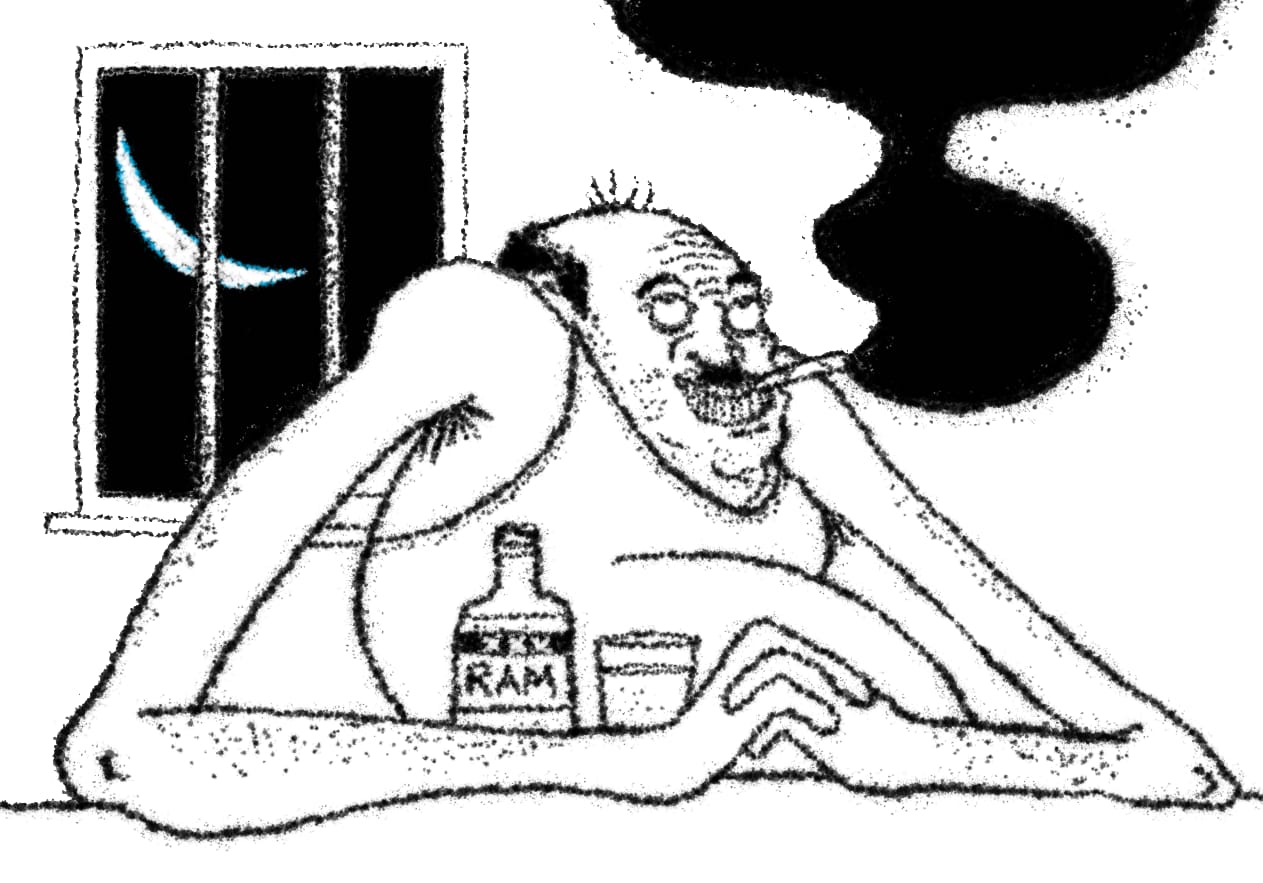

There was one more occasion when it could have ended well, except it didn’t—that a City of Joy rarely has its College Street English bookstores’ makeshift shanty loos equipped to flush fresh fetid feces—aggravating a nervous and nerve-racked boy without a way to clean his gentle bottom. When I reported this inadequacy of the establishment to the ungrateful shop clerk, he demanded I lug a heavy, leaky balti, descriptive of poverty, half across the street in my English medium school dress, so I fled as fast as my unwashed bottom would allow. I went as part of a group of kids who, although were all my age (Section B), did not seem to have the same digestive or excretory system that, from time to time, in my case, asserted that matter came in three states, and all the states were in fact coming out of some portion of my rear, all the time! So that’s what sort of started me—startled with the disequilibrium with looks, size, shape, velocity, and power in the gossipy, everyday, ordinary of this, what I eventually understood to be an extraordinary world, and this inconvenient discovery has stuck as I found out I am, in man’s limited prowess over the middling distances, an extremely Lilliputian man in every way, shape, and form, and to this day—especially as a redundant and reduced Bengali, that is where I am.
Too Holy
It’s neither an avowal of guilt nor of defeat—there are no adversaries to speak of except an individual’s own inhibition in most circumstances. But I like to recognize the dismal parts for what they are, not for what I wish them to be—and therefore, in introspections, I’ve found the weaknesses in me are my strength, because that’s what’s authentic. People in the world—tragically, in the holy land I dwell especially here, in Calcutta, infested with Hare Krishna, who-you-are is either political or holy skullduggery or in-your-face third-world cosmopolitan reality. And those with inborn inveterate duplicity, familial or ancestral wealth, or who have lower melanin or somewhat symmetrical distribution of skin and adipose around elevated cheekbones, standing a few inches above the median statistical height or fitting within a few inches smaller than the width of the median dress size—are propitiated by the population that lack these characteristics. This asymmetrical distribution in coveting is what causes the lifespan of some of us to get affected destructively by a devoted and toxic societal perusal of compensatory activities to match the deficiency with a need to acquire wealth, power, education, and other biologically, socioeconomically, or inaccessible accouterments that are otherwise available through inheritance. I was in this race, like the majority in this heckled herd, trying hard to make up for all the deficiencies in the only way the Calcutta law-abiding, all-fearing, genteel, educated, middle-class knew how, which was through school, by reading books. You reach heights in civilization or find mates with luscious curves only if you have, say, the torso of a Greco-Roman statue or like Tarzan the Ape Man, while if you’re short-statured, melanin-rich, sans the golden ratios in appointed parts, and mumble inaudibly constantly a jumbled plaintive monotone in effeminate whispers—you’re destined to die of undiscovery and ignominy, blatant racism—or put a star before the -ism, for in these matters, placeholders are your friend. This compensatory curriculum I started very early. My mother started me at age two—first, I gather, by reading the books to me, which service was quickly unnecessary as my neurons were quick to pick up the linguistic abilities. As far as I can tell, from very early on, I was thinking—a skill till today not at all a human requirement of any importance—and given to asking and not giving up if the answers didn’t satisfy me—I was irritatingly insistent.
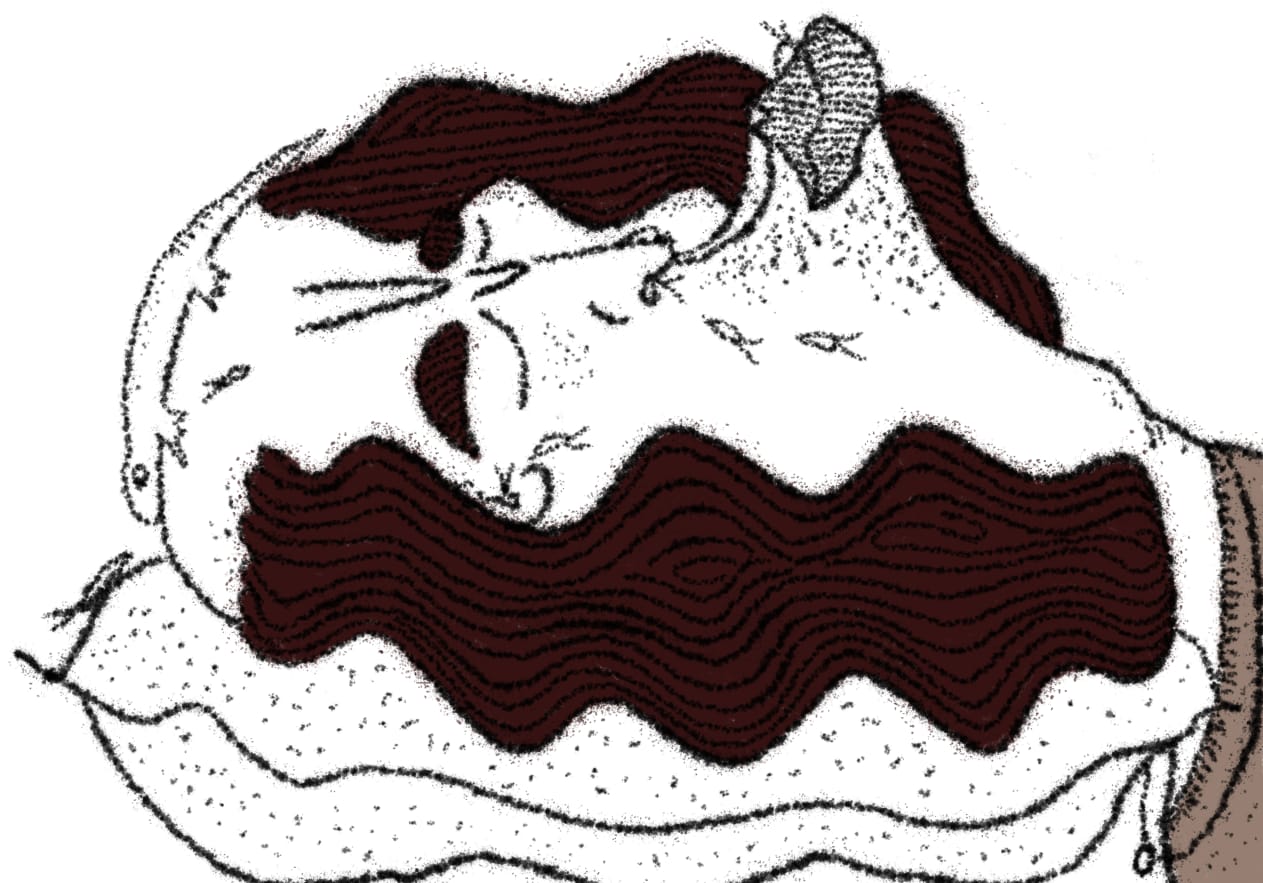

I was a wanker, and it was also a metaphor. And was, by the way, and not is because it’s a limp, ninny, noodle now, unwankably mushy and hides in its glen sulking or terrified.
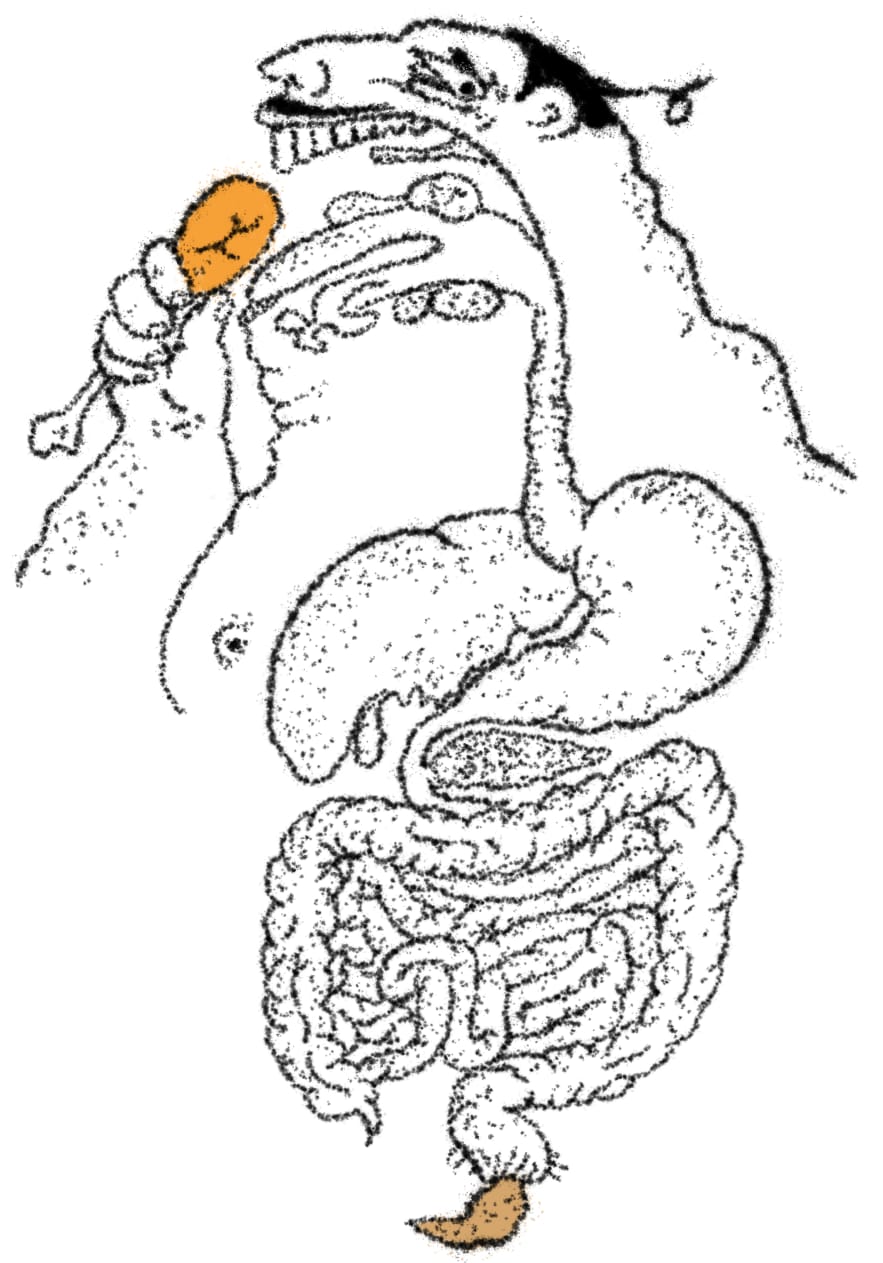
Student
Given how elementary the level of education in the Indian system is, in spite of the incredible amount of marketing disinformation willingly spread to glorify some form of Indian supremacy in the West—this is comical, if not farcical, in its irony, given that the English medium system I was enslaved in, or any denomination of modern education in India, is a British colonial legacy of efforts to squeeze local and cheaper clerks instead of the more expensive and often temporary ones of forcing Europeans in a hostile tropical climate. Even the British system came from a German system of indentured training programs.
Bias
Conversely, this doesn’t imply the Occident is superior in any subject—it’s not, either. Homo sapiens is an ape which looks slightly different superficially and is found with various doses of self-esteem issues and delusions over various regions, and as you can expect, every region hypes its own abilities without any evidence. Historically, we sit on a biased landscape of exploitation and racism which has created generations of impoverished citizenry, which contrast when juxtaposed with those descended from the affluent and ruling generations. This asymmetrical skew will now get even more topsy-turvy, even tipsy, given synthetic intelligence will get added to the more affluent and already educated enough to reap its advantages first.
So all the parochial supremacy of the Indian stock is false—anyone who puts in the hours can master a subject. I could too, and I did easily, and profligated most of the remaining time daydreaming or fornicating with my hand and endlessly worrying when touching the sphincter felt incredible or wondering cluelessly if the ejaculated fluid was a foreboding of cancer. Since all matter of excretion were bad, how could this feel so good, and why did it come about while cognitive diversions were guided carnally to the opposite side of the species? I couldn’t figure this out, of course, till much later. I was, after all, at the age when you are desirous of base sixty mathematical systems, for the illicit illegitimate love attraction to the word part formed by the first three alphabets in its name engraved in my palpitating lover-boy libidinous lust-crazed heart.
Those who prefer the opposite, longer-haired illusions of us for these cosmetic and meretricious patina of gloss—us cretins also misjudge melanin deficiency for superiority or experiments with holiness. We believe if white man George Harrison had condescended in his lyrics the coexistence of the dark-skinned mythological creation Krishna with the Christian mythology of white man Jesus, then they are both really real and there’s a cowherd with methemoglobinemia and an antique flute and a schizophrenic carpenter stuck on a cross who live somewhere in Attapara in North Calcutta under some Bengali pseudonym. Of course as far as a longer-haired illusion is necessary, no one wants to wake up next to a hag with no teeth, but even this logic is specious because—give enough time to Aishwarya Rai Bachchan to age and I promise you she’ll be a hag with no teeth. The only way out is a stuffed doll or a girl robot, but that is not how your brain would like to accept it—your brain would know it’s a thing, and because of its lack of consciousness, its participation as a partner is void. Wait a few more years until a girl robot can dump you; at that point, it won’t be a thing anymore.
Thus our ability to get muddled works hand in hand with a corrupted framework of basic data, information, or knowledge, and we grow up on a pyramid of crumbling make-believe fiction and frequently conflate it with facts. Trade, for instance, is a crumbling facade of tyranny and monopoly which is run by an undergrowth of Machiavellian Marwaris and Gujaratis with the blessings of the well-propitiated elephant god Ganesh and the government. I went to the US in the August of 1998, then the Indian rupee was in the lower forties, around 42–45; I think the dollar buying rate was what my father paid when I boarded the Boeing 747-400 (“Queen of the Skies”) in August with USD 1600 in my pocket, bought with my father’s salaried Indian rupees as a student. Now it’s crossed 90, and back then India, that generation, was actually more scientific and literate. Now it’s just a mascara of that past, and it’s all religion, pseudoscience, and bearded gurus, lotus-aloft are doing all the grandstanding and gaslighting, all the talking and taking, as well as all the unthinking required as a matter of politics and policy it seems.
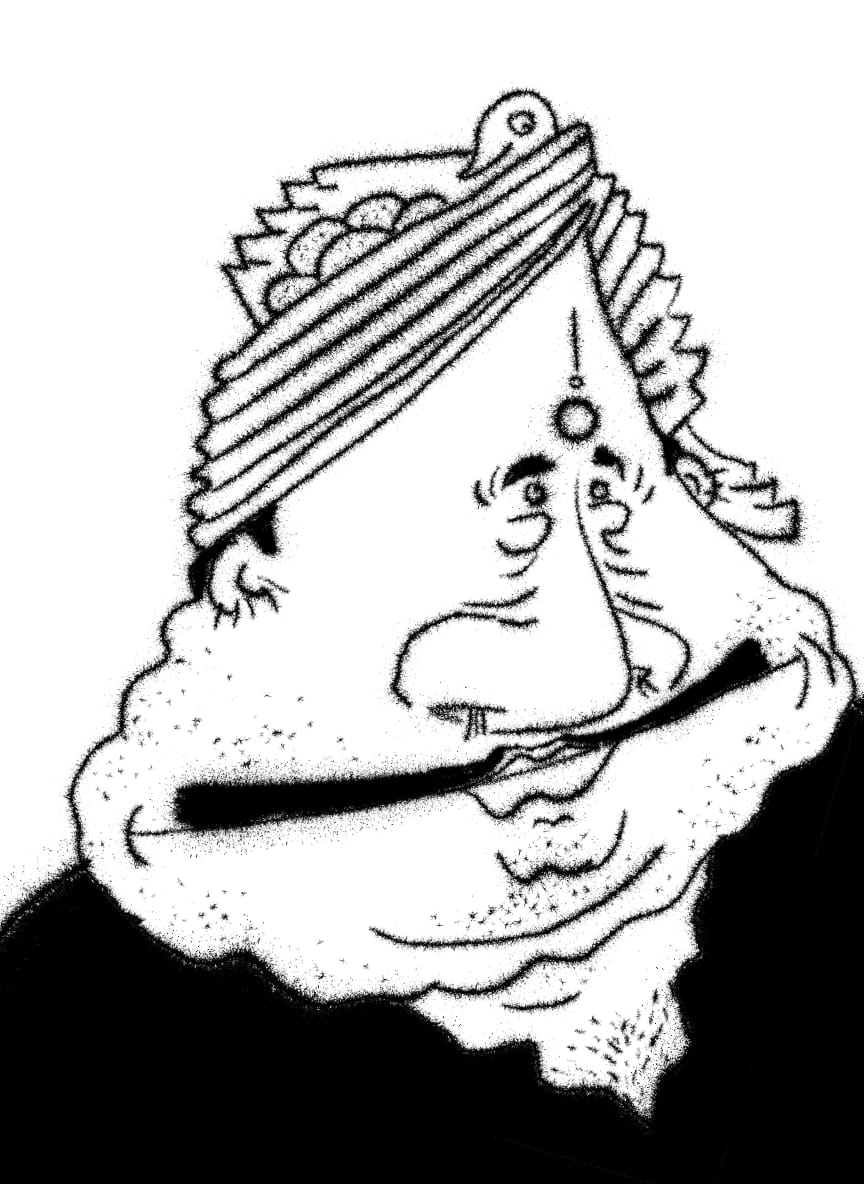
I had also noticed adults insisted on covering up inconsistencies in their fictions with weaker tapestries of lies, and the separation of the ruling and the ruled was inherent in being party to this willed obfuscation or willing obeisance. This was fractally how society was structured at various levels—a distributed system of arranged or imposed parents and willing or subjugated children, at whatever level of fictional abstraction I looked: parent–child, of course, country leaders–citizen, company corporate vs. workers, religious elite priests and worshippers or the faithful, extending all the way to authors, artists, sportspersons and their consumers, teachers and students. The game was mainly lying and manipulation, with manicured gaslighting tweaked as per the needs of the specialty.
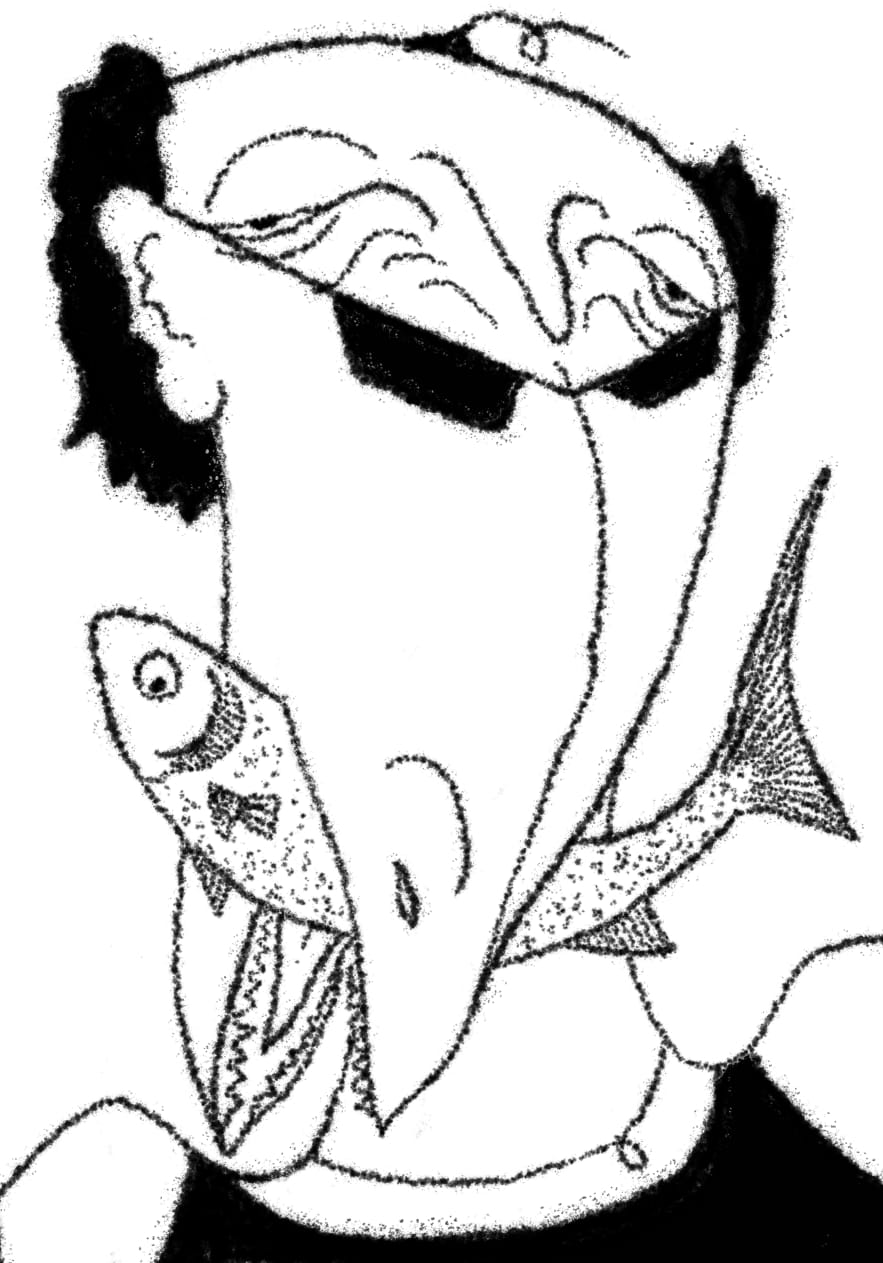
The prevalence of mythology—emphasized and encouraged bias, or the absence of nuanced understanding of the operating models versus the indoctrinated and forced fictions—I saw created a hierarchy of flimflammery, superstitious jibber-jabber, pseudoscience, and an inflated sense of supercilious religious affirmation in Bengali society, which at that time was partly Marxist in Calcutta and wanted to hold on to atheism. And in spite of their efforts, most had too little reading in them to make up their mind and societal dialectics stood on the shoulders of glib non-sequiturs, ugly shrunken dwarfish ghouls that have multiplied since that time—a misunderstood disinformation of history, mythology, and fibs that my people feel foolishly obligated to be hypothecated to and fritter their lives away wallowing in the tragic smelly feces of what isn’t true. I could never understand why being enamored with the softer sensibilities in music or even the illogical nostalgia for an unseen pristine superior Indian past needed to be so unmoored in reality—marinated in the garam-masala of useless local aphorisms, idioms and idiosyncrasies. I remember Darwin’s evolution was an optional chapter in my higher secondary biology contending with a subject as trivial as pisciculture—cosmology never entered the lexicon, and astronomy was synonymous with horoscopes, palmistry, and astrology. The Bengal I grew up in was in the eighties still really pre-Victorian, and now India, under the new religious right, has slid a few centuries back into an equivalent dark middle age—so much for moving forward. It’s all atavistic growth; appearances of gentrification, or any sophisticated sheen, is patina, imported from outside the country, but inside it’s a snare, a pit full of vacuous but venomous vipers.
Rebirth
The thing about childhood is, in modern parlance, a song playlist impressed upon you that you are suddenly very fond of, or certain parts of which, based on what we can think at the time, grow seeds of nuanced distance or distaste. It’s only later, layer upon impressed layer again, year by year, that we gradually graduate into the terribly opinionated personality that we are. I admit not everyone is inflexible burnt toast—I wasn’t—but a few bitter experiences straightened me out. It was, in fact, in trying to get real close to reality as an entrepreneur that this rind-hardening was effected. I guess the quality of wood and shellac needed was already there; just some vigorous rubbing-in was all it took to give me that anti-reflective patina of shine-reflecting hard coating that is me. Can I go back from this hardened reticence to the loquacious milquetoast I once was? It would take legal anti-psychotics with Ambien and Dopamine agonists, illegal psychedelics, total amnesia, or a different rebirth—or all three, really.
But in the end, what I’m trying to say in a long, winding way is that I did a lot of reading—and still read, to my mother’s chagrin—that no, none of the readings I did do me any good as far as carrying out the original intention—I haven’t accumulated any wealth or curvaceous mate, just books. But I still say it’s incredibly important to read books. The control I have when I read is that I can go over a sentence, stop completely in my tracks, and clarify the point in question before moving on. It can be both the complexity of the word, thought, or idea, or sometimes, as it is in my case, the felicity and diction of the writer—the chance to spacetime travel to that word, thought, or idea and relive or reimagine that moment, or sometimes, as in the case of mathematical or scientific nonfiction, dumb it down to the everyday ordinary around me, carefully selecting the metaphors that are the best fit but can help me think differently to remove the obfuscation in the passage and really “get it.” In today’s India meritocracy is like a hoax you force on the blind and disabled elderly in a care home who can’t ask for a refund. But I still read, and this blog is where I share it. And not just books that I read—I travel, and work on interesting ideas or at least think about them, and want to share my personal life and work experiences and knowledge. And if my exposure can help someone like me back when I was little—a boy or girl growing up without a compass in Calcutta or elsewhere—I’d feel I did something right, for a change.
Bipolar Writing
Sometimes, in my depression, I’m so hopeless and unsure of the future I delete everything I’ve written, so most of what you read here are only those that have survived a genocide.
It’s important to remember, though, that the intensity and ferocity of emotions on display are of the moments in a bipolar mood, and it’s not correct to infer from it a sticky trait or indelible personality which is fixed. I am, like every human being, a liquid that occupies its vessel, overflows it, sulks in it, flows out through its cracks, or in a boiling determination explodes the containing walls.
Writing in this way, judging the way through my own pathology of bipolar depression, isn’t the clearest form of communication, but this is the truest form I can muster. That, and being an atheist or hoping for true democracy in India, does open me up to a lot of judgments, ridicule, and fangs and teeth, which I completely understand and accept, for which I am re-formatting my posts and have settled on a color-coding system of red and black to stay away from if you are easily offended and blue and green for mildly offensive language—but I must make it clear that I diarize what is and what’s on my bipolar mind so there’s is no writing that’s completely kosher. But at least with this minimal color coding, you can stay in your lane and find something entertaining without getting unnecessarily peeved. Red is for red-light area and has sexual or scatological imprecations and is satirical, irreligious and politically secular, black is the same with personal undertones and my experiences. With the rest I’d like this blog to wander in a slightly different direction. I’m fifty now, and what entertains me far more than hot takes or trends is rereading, rediscovering, and sharing some of the scientific and mathematical obsessions that have kept me company all my life. So for general topics I’ll color them blue if they are more sciencey but non-mathematical and I’ll use green for mathematical topics, orange for any other topics. There are more exceptions to these rules but this is a good beginning I think. If you do condescend to read the content then you can choose your colors. I mean, you don’t have to; you have ten trillion reasons not to, I’m sure.
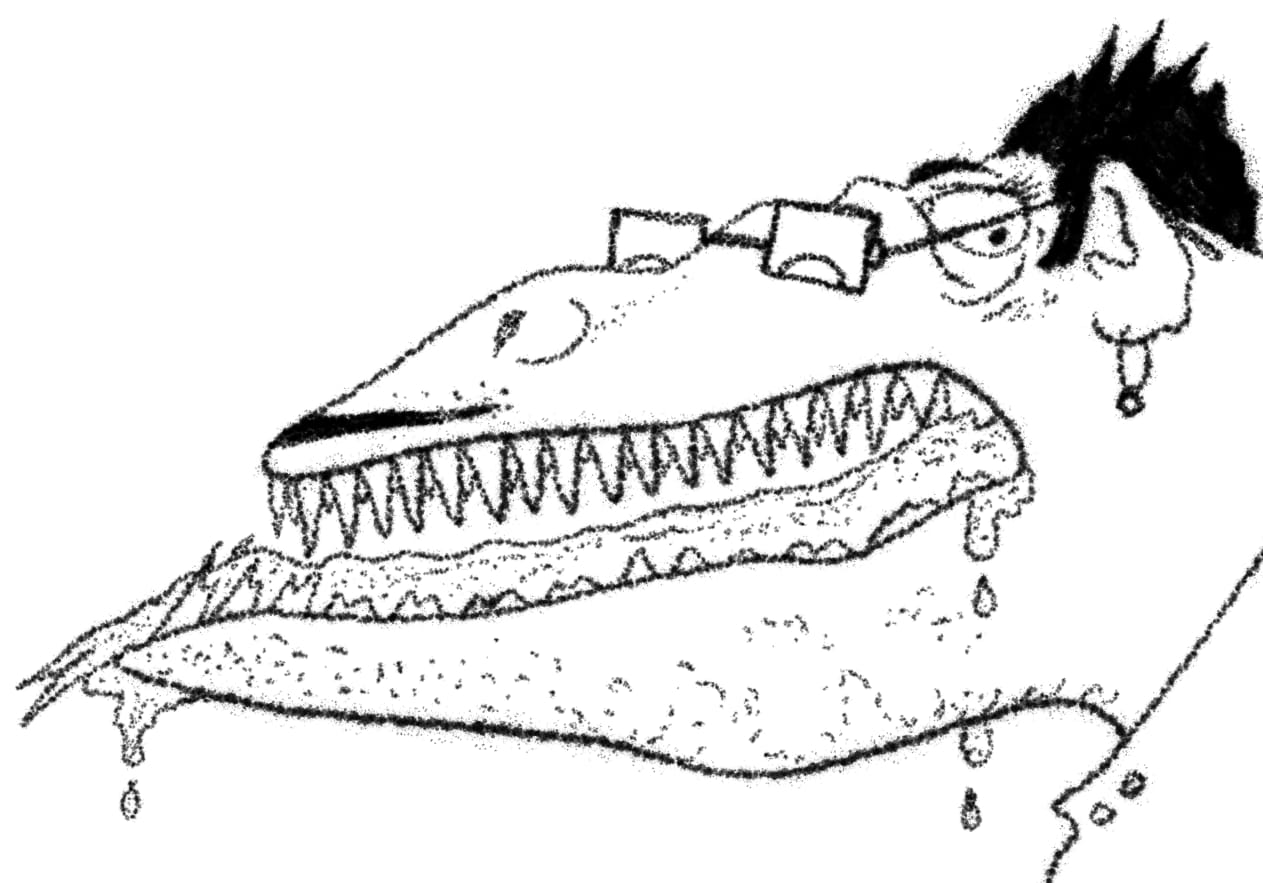
Most human beings come incarcerated in their minds, their stories are therefore left untold, their imagination stay hidden—but I am articulate and I can draw droll caricatures, so I can bring my mind to you, and that’s what this blog or some of its contents are about. It varies from exploratory non-fiction, formal prosaic posts, loose squibs, looser still and profane, dopey doggerels—hokey hawk tuahs, greasy sentiments in verse. A fair bit is in extreme unparliamentary and unsavory diction that may peeve a lap dog, an uneducated mother, an easily offended belligerent female or bellicose feline, a crusty, dogmatic, obdurate religious zealot, or an unscrupulous, rabid, political ideologue or corrupt politician, certainly brittle eggshell egos—I won’t waltz around to the tune of cancel-culture orchestrated by social media cliques and clans formed by an assorted motley menagerie of the above types. And to such people, might I therefore kindly request not to leave the comfort of their dopey dogma, or if they do, be reasonably reminded, they’re reading this blog of their own volition, their health and well-being is in their own two good hands, or three, if an indoctrinated, religiously fine-tuned and fanatic AI is reading this. For anyone weaning off, this blog isn’t the first place to get shocked, please wander off to explore milder shocks for that first experience.
And I have to add to the list of why I write to the reasons George Orwell (Eric Blair) gave, because there’s a hypomania component to my bipolar depression where there’s a lot of anger and irritability that can sometimes be assuaged by felicity and diction, even if that is obscene or scatological. In fact, I sometimes think I have a latent form of Tourette’s that manifests itself when I am cycling through these states. And then, when I am depressed, I am no longer that person, and the character and word choice shifts colossally. I know I am weird, but that’s the way I am; there’s no consistency in who I am, almost, it’s just a person inhabited by his mood, except for lucid moments when I am sane enough to sit up and program a website or stitch just enough normalcy around the periphery of my shattered life to bring these words to anyone who wants to read them. So I write, delete what I had written, rewrite, obsess over it, delete it again, write it from scratch, and do this endlessly, and I often have a wall of text like what you are reading now, regretfully, from the very minimal thoughts itching for an expression. This is made worse because of my bipolar depression, and writing is the easiest non-prescription remedy to dissolve away my hypomanic irritation or angst, which, if left without an immediate outlet, often spiral into extremely deadly depressive anxiety-filled labyrinthine mazes of ruminations without an exit that tend to stagnate once they are given a foothold. The writing is therapeutic, it breaks the hazardous doom-scrolling me-me part of the brain (the default mode network) from gaining its spiral cyclonic strength. This is also the reason why in my writing I don’t ostracize the profane narcissist in me that seems to want to have a first go at a topic, because censorship leads to aggravated mania or depressive lows. This is my sort of writing or sketching away my moods as best as I can.
Left
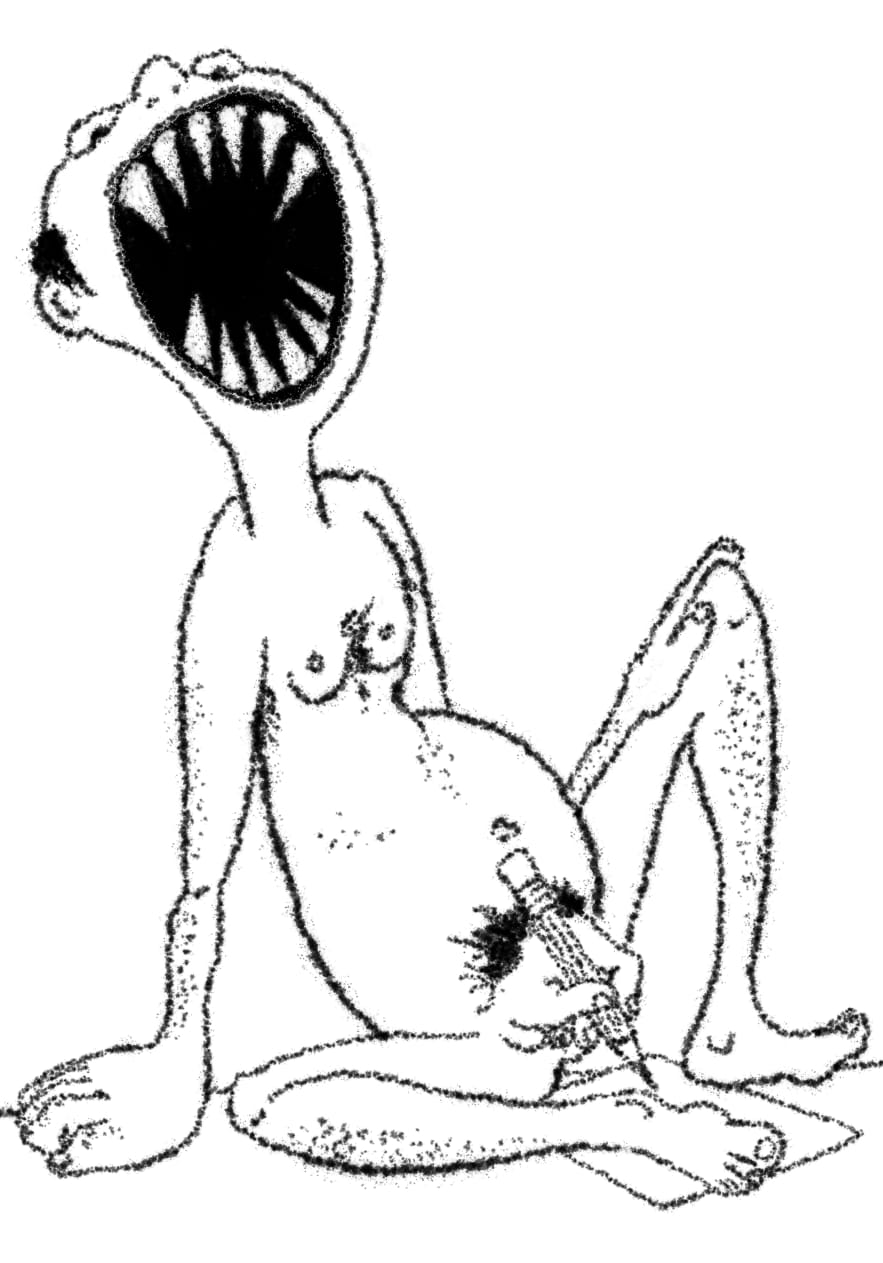
The characters I draw are the distortions that I have picked up from the odd characters in children’s books by my favorite Bengali (বাংলা) fiction writer Shirshendu Mukhopadhyay (শীর্ষেন্দু মুখোপাধ্যায়), that can be found in what he calls the Odbhuture (অদ্ভুতুড়ে) series. And marinated in left-leaning humor. Just for clarification, I know a lot of people are confused by this left-right business; it has the same origin as an omelette, that is, it’s French. It’s literally about where people were sitting in a room, historically back in 1789, as I gather, during the French Revolution. The new French National Assembly had to decide boring-but-important things like what to do with the king, the church, land, taxes, mobs with pikes, etc. In that chamber, deputies started sorting themselves by attitude to the old order. On the right of the presiding officer were those who supported the king, aristocracy, church privileges, and insisted on a more hierarchical “don’t break everything” approach. Those who wanted big changes – weaken or abolish the monarchy, more equality, more democracy – sat on the left. This is my calling, “let’s kick this can of worms with my left boot and see if something interesting happens.”
.jpg)
The humor that I imbibed while I was in the US was humor from George Carlin and gleaned from the reality-endearing misanthropic art of Robert Crumb and other underground comic movements, so I have a proclivity to sketch the privates on these Odbhuture characters or other Homo sapiens as representing its culture-deeds immersed in the weird superconfident but usually and always wrong fiction—for males this is just sketching a sphere with hairs and for the better half a hairy triangle with a line intersection at one corner—really hirsutism in geometry, but makes people mad, because they don’t want to be seen without underwear, unless it’s erotica. People want to be infinitely entertained. They don’t want to go back to school or be informed about how you were molested—well, maybe only if you’re an attractive woman who can describe your bodily massacre in a way that gives the reader’s animal region the requisite blood flow. So I know an old man’s blog posts are never going to be read, but I write them, I want to write them, and I sketch, and I try to remember who I am because I’m still alive, and this writing and sketching is the only vent I have left. Most people who have always resorted to taking shortcuts that require the least effort, and they being the majority, will judge anyone prolific as LLM automation—which, in a way, is what I want: staying obscure and uninfiltrated by chaotic and short-lived, distractive attention from people who least represent my type, my thoughts, or my life. But putting your thoughts on paper, the courage necessary—not just the artifice to carve words in woods—takes a whole lifetime and courage, especially the introspective honesty very few people have remaining in them. When everything is pastiche and LLM automation I want to share my personal unfiltered and raw thoughts, at least when I’m dead the exhaust of the effort would help feed a generation of creative bipolar bots, I see the pathology of our feeble species as important as what we label as normalcy.